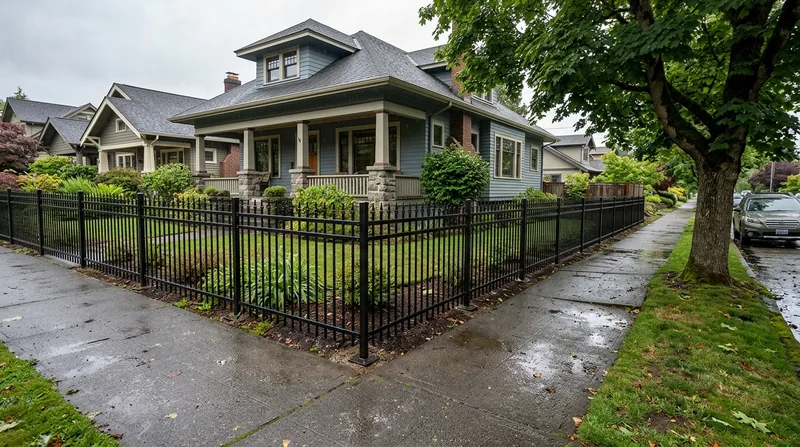



Seattle homeowners face a unique challenge when it comes to metal fencing: our maritime climate brings constant moisture, salt air, and frequent rain that can corrode traditional wrought iron over time. Aluminum fence installation in Seattle offers a durable alternative that resists rust while delivering the classic aesthetic of ornamental iron. Whether you're protecting a residential property in Ballard, securing a hillside lot in Magnolia, or adding curb appeal in Fremont, aluminum and ornamental iron fencing handles Seattle's wet seasons without the maintenance burden of steel. We set posts deep enough to anchor panels firmly on Seattle's sloped terrain, and we work from your existing survey to install on the line you identify. Since 2016, we've built fences that stand straight and solid through every season.
Why Aluminum and Ornamental Iron Fencing Matter in Seattle's Wet Climate
Seattle's combination of high humidity, frequent precipitation, and occasional salt spray from Puget Sound creates an unforgiving environment for ferrous metals. Wrought iron and steel fencing corrode from the inside out once moisture reaches bare metal, and traditional rust-prevention coatings wear thin over five to ten years. Aluminum, by contrast, forms a natural oxide layer that stops corrosion at the surface, making it ideal for our climate. Ornamental iron fencing, when properly powder-coated and maintained, can last just as long if you commit to annual touch-ups. Many Seattle homeowners choose aluminum for its genuine set-and-forget durability.
- Aluminum resists rust even in high-moisture environments without active maintenance or repainting.
- Powder-coated finishes on both aluminum and ornamental iron protect against weather and UV fade for ten to fifteen years.
- Ornamental iron delivers a heavier, more traditional aesthetic if you're willing to inspect and touch up coatings every few years.
- Both materials work on steep or uneven terrain because panels can be stepped or racked to follow the slope without gaps.
- Aluminum panels are lighter than iron, making installation faster and reducing stress on posts in high-wind areas.
Choosing between these materials depends on your maintenance tolerance and the visual impact you want. Seattle's building department and local HOAs often have material restrictions, so verify your property's rules before committing to a design. For more information on permits and regulations, Seattle's Department of Construction and Inspections publishes fence permit requirements online.
Key info: A Sammamish homeowner on a steep lot chose aluminum because it required no racking or stepping, panels hung straight, and the black powder coat matched their contemporary home. An Issaquah property with an HOA restriction on iron height selected aluminum at 4 feet, staying within code while maintaining the ornamental look they wanted.
How We Install Aluminum and Ornamental Iron Fencing on Seattle Properties
Our installation process begins with a site walk and utility locate. We call 811 to mark underground lines before digging any post holes, a requirement under Washington law. We then set posts deep into the local hardpan, using concrete to anchor them against settling and frost heave. For sloped lots common in Seattle neighborhoods like Queen Anne, Green Lake, and West Seattle, we either step panels vertically or rack them to follow the grade. Every panel is plumb and every post is braced for wind and soil movement.
- We schedule a free estimate, walk your property line, and discuss material, height, and finish options.
- We call 811 to locate underground utilities and mark safe digging zones on your property.
- We set posts in concrete at depth appropriate for your soil and local conditions, bracing them square.
- We hang panels level and secure all connections, hardware, and gates before final inspection.
- We walk you through maintenance expectations and provide contact information for future repairs.
The entire process typically takes one to three days depending on fence length and site access. If your property already has an existing fence with failing posts or damaged sections, we assess whether repair or replacement makes financial sense before recommending a course of action.
Local example: A Bellevue property with a 30-foot run across a steep slope required stepped aluminum panels to follow the terrain without creating gaps at the bottom. We set six posts in concrete, stepped three panels to match the grade change, and installed self-closing hardware on a matching gate. The job took two days and delivered a clean, maintenance-free fence that will hold for twenty years.
Aluminum and Ornamental Iron Fencing Methods and Finishes
| Method | Description | Best For |
|---|---|---|
| Aluminum with powder coat | Lightweight aluminum extrusions hung on posts set in concrete, finish applied at factory or site. | Seattle properties wanting durability without maintenance, steep lots, modern or traditional design. |
| Wrought iron with powder coat | Forged or welded steel components, powder-coated for corrosion resistance, requires periodic inspection and touch-up. | Heritage properties, formal estates, homeowners willing to maintain finish every three to five years. |
| Ornamental steel with galvanize plus coat | Steel panels hot-dipped galvanized, then powder-coated for double protection against Seattle moisture. | Commercial properties, waterfront exposures, high-salt-air environments where maximum corrosion resistance is essential. |
| Stepped or racked installation | Panels installed vertically on grade changes or angled to follow slope, maintaining full height at all points. | Seattle hillside properties in Wallingford, Beacon Hill, or Eastlake where level ground is rare. |
Each method balances durability, maintenance, cost, and aesthetics. Aluminum requires virtually no upkeep beyond an occasional rinse with a garden hose. Wrought iron delivers authentic period character but demands your commitment to inspecting and recoating every few years. We recommend aluminum for most Seattle homeowners and reserve wrought iron recommendations for properties where heritage or design intent justifies the maintenance burden.
Aluminum and Ornamental Iron Fencing Cost in Seattle: What to Expect
Aluminum fencing in Seattle typically runs from $52 per linear foot as a starting point, while ornamental iron (wrought iron or steel) begins around $65 to $85 per linear foot depending on design complexity and finish. A 100-foot aluminum fence with basic pickets and standard posts costs roughly $5,200 to $6,500 installed. Ornamental iron for the same run runs $6,500 to $8,500 or higher if the design includes scrollwork, decorative caps, or specialty hardware. These figures include posts set in concrete, panel installation, and standard hardware such as hinges and latches.
Several factors move your cost up or down. Stepped or racked installation on sloped terrain adds labor and may require additional posts or bracing, increasing the total by 10 to 20 percent. Custom heights above 6 feet or below 3 feet require special ordering and engineering. Gates, self-closing hinges, and automatic operators add $300 to $1,500 per opening depending on style and automation. Ornamental finishes such as bronze, copper, or specialty powder coats cost more than standard black or white. Tight site access or difficult soil conditions can delay installation and raise labor costs.
The best way to understand your actual cost is to get a free estimate from two or three local installers. An on-site visit lets us see your terrain, identify utility conflicts, and give you a firm price before any work begins. See our full pricing overview for typical ranges across all our services.
What to Look for When Hiring an Aluminum and Ornamental Iron Fence Installer Near Seattle
Hiring the right installer protects your investment and ensures your fence meets local code and your property's deed restrictions. Start by verifying that any contractor you consider carries full general liability and workers' compensation insurance. In Washington, construction contractors working on projects above a certain threshold must register with the Department of Labor and Industries under RCW 18.27, backed by a surety bond. Ask any contractor you interview whether their work scope requires that registration, and request a certificate of insurance regardless. Check references from recent jobs in your neighborhood so you can see how fences hold up over time.
Understand your property's rules before committing to a design. Many Seattle-area communities have HOA architectural standards that govern fence height, material, and color. Your city or county building department may require a permit for aluminum or iron fencing, or may exempt fencing under a certain height. Utility locates are required by law before digging, and a reputable installer will never skip that step. If your property adjoins a neighbor, confirm the fence line location with your existing survey or have a licensed land surveyor determine it. We work from your survey and install on the line you identify, but we do not perform boundary determinations.
Ask installers about maintenance expectations for the material you choose. Aluminum requires no coating refresh; ornamental iron needs inspection and touch-up every three to five years. Get everything in writing, including the scope, timeline, material specifications, and total price. Call us at (425) 696-3219 or request a free estimate online to discuss your project and get a firm quote with no obligation to book.
Aluminum & Ornamental Iron Fencing in Seattle: Pricing Guide
| Service | Price | Details |
|---|---|---|
| Aluminum fencing, standard profile | Starting at $52/ft | Posts set in concrete, panels level or stepped to grade, standard hardware and finish included |
| Ornamental iron (wrought iron or steel) fencing | Starting at $65/ft | Forged or welded steel, powder-coated finish, posts set deep in concrete, includes basic hardware and hinges |
| Custom heights, specialty finishes, stepped installation | On estimate | Terrain, design complexity, and material specifications require on-site review before pricing can be accurate |
| Gates and automatic operators | $300 to $1,500 | Ornamental or aluminum gate, self-closing hinges, and electric operator where applicable, installed and tested |
| Travel and utility locate | Included | No separate mileage fee or call-out charge for Seattle and surrounding service areas, 811 locate included |
| Estimate | Free | On-site walk, material review, and written quote within 24 hours, no obligation to book work |
Indicative pricing, the exact cost depends on square footage, finish, and site access. Free personalized estimate within 24h at (425) 696-3219.


