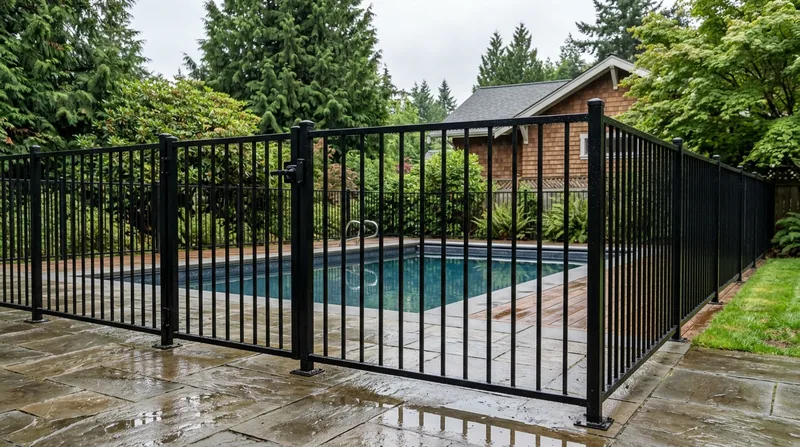




Pool fence installation in Seattle requires more than just assembling panels and hanging a gate. Washington State law mandates barrier fencing around residential pools to prevent unsupervised access, and Seattle's local code enforces specific height, gap, and latch standards. The ground here drains slowly in many neighborhoods, so posts must sit deep in concrete to resist frost heave and settling. Our work centers on setting posts correctly, sizing the mesh or board gaps to meet code, and ensuring gate latches function reliably year-round. We've been installing pool barriers since 2016, and we're AFA Member Installers with the American Fence Association.
Why Pool Barrier Fencing Matters in Greater Seattle
A pool is a liability and a joy, but only if it's properly enclosed. Washington State requires a four-sided barrier around any residential pool, spa, or hot tub. The fence must meet minimum height, gap, and latch requirements set by the pool code that applies at your address. Many Seattle neighborhoods have specific setback rules, and some homeowners associations enforce additional height or material restrictions. Installing a pool fence is not optional if you have a pool, and getting it right the first time protects your family and your insurance coverage.
- Posts must be set deep in concrete to handle seasonal ground movement and maintain barrier integrity year-round.
- Gate gaps and spacing must comply with the pool barrier code, which typically allows no more than a 4-inch sphere to pass through.
- Self-closing, self-latching hardware is required on all pool gates to prevent accidental entry.
- Fence height is usually 48 inches minimum, measured from the ground on the pool side.
- A licensed land surveyor can determine your property line, but we work from the boundary you identify.
Meeting these standards is non-negotiable, and the cost of doing it right is far less than the liability or injury risk of cutting corners.
Key info: Washington State pool barrier requirements are enforced by your local building department and the authority having jurisdiction. We install pool fencing to meet local pool barrier codes, with final determination resting with the AHJ. For specific code language, contact the Seattle Department of Construction and Inspections or your local jurisdiction. See Washington State Department of Labor and Industries for state-level guidance.
How We Install Pool Fencing in Seattle: Process and Materials
Pool fence installation begins with understanding your site, the code that applies, and the best material for your landscape. We locate utilities using the Washington 811 call-before-you-dig service to ensure no water, gas, or electrical lines are struck during post placement. We then set posts in concrete at the depth and spacing required by code, establish the fence line from your property survey or existing markers, and choose a material and height that meets both the barrier code and any HOA guidelines. Mesh pool fencing, aluminum frames, vinyl, or board fencing all work, depending on your preference and local rules. The gate hardware is critical: it must swing clear of pooling water, latch automatically, and operate smoothly in all weather.
- We call Washington 811 before digging any post holes to locate underground utilities and prevent damage.
- Posts are set deep in concrete, never tamped, to provide stable anchorage and prevent frost heave.
- We measure and verify all gaps, rail spacing, and gate clearance against the applicable pool barrier code.
- Gate hardware is tested for self-closing and self-latching function before we consider the job complete.
- We work with your existing survey or the property line you identify, and we install on that line.
This methodical approach means your pool fence stands solid and stays compliant, season after season.
Example: A Bellevue homeowner with a vinyl-lined pool and a sloped lot needed a 48-inch aluminum mesh barrier. We set posts at 6-foot intervals, installed the mesh to a 4-inch gap standard, and fitted a self-closing gate with anti-sag bracing. The gate swings clear of the low spot where water collects after rain. The entire job took three days and cost within the mid-range estimate because access was good and the site was straightforward. See our work on aluminum and ornamental iron fencing for more details on durable pool barrier materials.
Pool Fence Materials: Mesh, Aluminum, Vinyl, and Wood
Your choice of material shapes the look, durability, and cost of your pool barrier. Removable mesh pool fencing is temporary, affordable, and ideal for renters or seasonal pools. Aluminum frames with mesh or slats offer a clean, low-maintenance look and excellent weather resistance. Vinyl is durable and requires no staining or sealing, though it costs more upfront. Wood privacy fence can serve as a pool barrier if it meets gap and height requirements, but it demands regular maintenance to stay sound. Each material has a role, and the right choice depends on your budget, aesthetic, and how long you plan to keep the pool.
| Material | Description | Best for |
|---|---|---|
| Removable Mesh Pool Fence | Lightweight aluminum frame with transparent mesh panels, installed on the deck perimeter, removed in off-season. | Seasonal pools, rentals, or homeowners who want flexibility and minimal visual impact. |
| Aluminum with Mesh or Slats | Powder-coated aluminum frames with mesh or solid slats, permanent installation, low maintenance, excellent longevity. | Homeowners seeking durability, a modern look, and minimal upkeep in Seattle's wet climate. |
| Vinyl or PVC Fence | Solid vinyl panels or vinyl-coated frames, no painting or staining required, resists rot and fading. | Long-term installations where maintenance is a concern and a solid, finished appearance is preferred. |
| Wood Privacy Fence with Proper Gaps | Pressure-treated pine or cedar boards installed side-by-side or board-on-board to meet gap requirements, requires staining and sealing. | Homeowners who want a traditional look and are willing to maintain the wood, or those with HOA rules favoring wood. |
Each material meets code when installed correctly. The choice is yours, and we build with what you choose.
Pool Fence Installation Cost in Seattle: What to Expect
Pool fence installation in Seattle typically starts at around $40 per linear foot for a basic removable mesh system and rises based on material choice, site conditions, and labor complexity. An aluminum mesh barrier on a straightforward site might run $50 to $70 per linear foot. Vinyl or wood fencing for a pool barrier can reach $60 to $100 per linear foot depending on height, material grade, and finish. A typical residential pool requiring 120 to 150 linear feet of fencing could cost anywhere from $5,000 to $12,000 or more, depending on material and site challenges. Factors that increase cost include difficult terrain, poor drainage, the need for grading or site prep, proximity to structures, and any required permits or engineering.
The best way to understand your actual cost is to get two or three estimates from local installers who can see your site, measure the perimeter, and identify any obstacles. We offer free estimates with a response within 24 hours, and we can answer your specific questions about material choices and code compliance. Visit our full pricing overview to see more detail on how we calculate costs for different fence types and conditions.
What to Look for When Hiring a Pool Fence Installer Near Me in Seattle
A pool fence is a safety barrier and a code requirement, so hiring the right installer matters. Look for a company that understands Washington State pool barrier law and the specific code that applies in your city or county. Insurance and workers' compensation coverage are essential, so ask for a certificate of insurance before any work begins. In Washington, fence installation does not require a state contractor license in all jurisdictions, but code compliance and proper permitting are mandatory. Check whether your city requires a permit for pool fencing, and confirm that your installer will handle the permitting process. If your property is in a homeowners association, verify that the fence material, height, and color comply with HOA architectural guidelines before installation starts.
- Ask for references from recent pool fence installations and check that the work meets current code standards.
- Request a free, no-obligation estimate that includes material, labor, and any permit costs specific to your location.
- Confirm that the installer will call Washington 811 before digging and will locate utilities on your property.
- Verify insurance coverage, including general liability and workers' compensation, and ask for proof before work begins.
- Discuss gate hardware, self-closing and self-latching function, and how the gate will handle water pooling on the deck.
- Ask whether the installer is an AFA Member or holds other industry credentials that demonstrate commitment to quality fencing work.
Taking time to vet your installer ensures your pool fence is installed right, stays compliant, and protects your family for years to come. Contact us at (425) 696-3219 for a free estimate and to discuss your pool barrier project in detail.
Pool Fence Installation in Seattle: Pricing Guide
| Service | Price | Details |
|---|---|---|
| Removable Mesh Pool Fence | Starting at $40/ft | Lightweight aluminum frame with transparent mesh, installed on deck perimeter, ideal for seasonal or rental pools |
| Aluminum Mesh or Slat Barrier | Starting at $50/ft | Powder-coated aluminum frames, permanent installation, low maintenance, cost rises with height and site complexity |
| Vinyl or PVC Pool Fencing | Starting at $60/ft | Solid vinyl panels or vinyl-coated frames, no staining required, durable in wet climates, higher material cost offset by longevity |
| Wood Privacy Fence as Pool Barrier | Starting at $50/ft | Pressure-treated pine or cedar with proper gap sizing, requires staining and sealing, cost depends on board grade and finish |
| Complex or Large-Scale Installation | On estimate | Sloped terrain, drainage work, grading, site prep, or unusual site conditions require an on-site assessment before pricing |
| Free Estimate and Consultation | Free | Response within 24 hours at (425) 696-3219, includes site measurement, material recommendations, code review, and no obligation |
Indicative pricing, the exact cost depends on square footage, finish, and site access. Free personalized estimate within 24h at (425) 696-3219.


